
If you’re new to shipping freight, you’ve probably heard the term “freight broker” thrown around alongside “carrier,” “3PL,” and “logistics partner,” often used like they all mean the same thing. They don’t. Understanding what is a freight broker, and how it differs from the other terms, matters because it directly affects how much control, flexibility, and accountability you get on your next shipment.
What Is a Freight Broker? The Simple Definition
A freight broker is a licensed intermediary that connects shippers who need freight moved with carriers who have trucks available to move it. A broker doesn’t own trucks or employ drivers. Instead, brokers use industry relationships and technology platforms to match your freight with a carrier in their network that’s suited to the job.
Freight brokers are distinct from freight forwarders, even though the terms sometimes get used loosely. A forwarder typically negotiates prices, determines transportation modes, and establishes shipping routes, functioning as a liaison between a shipper and various shipping firms, often for more complex or international moves. A broker’s role is narrower and more transactional: matching a specific shipment to a specific carrier.
What a Freight Broker Actually Does, Step by Step
When you book freight through a broker, the broker takes your shipment details, origin, destination, freight type, weight, and timeline, and searches their carrier network for a match. Once a carrier accepts the load, the broker typically manages communication between you and that carrier, handles the paperwork, and in many cases negotiates the rate on both ends.
The broker earns money on the spread between what you pay and what the carrier is paid to run the load. That’s the core of the brokerage business model: access and coordination, not equipment ownership. Some brokers operate as part of a larger third-party logistics, or 3PL, provider, which may also handle warehousing, freight payment auditing, or broader supply chain strategy alongside the core brokerage function.
The Trade-Off: Flexibility vs. Direct Control
Brokers offer a real advantage in flexibility. Because a broker isn’t limited to its own fleet, it can draw on a wide network of carriers across different regions, equipment types, and freight modes, including intermodal moves that a single asset-based carrier often can’t easily handle alone. That makes brokers a strong fit for shippers with variable volume, seasonal spikes, or freight moving across a wide range of lanes.
The trade-off is that a broker’s capacity depends entirely on carrier relationships and current market conditions. When the market tightens, the broker is competing for the same trucks everyone else is trying to book, and service consistency depends on which specific carrier ends up on your load, not on the broker directly. Less direct oversight is part of that same trade-off, since a broker’s visibility into how your freight is actually being handled in transit is only as good as the carrier’s own communication.
Freight Broker vs. Asset-Based Carrier: Why the Difference Matters to You
An asset-based carrier owns the trucks, trailers, and often employs the drivers moving your freight directly. That ownership changes the accountability picture. Because the carrier physically controls the equipment, service tends to be more consistent and predictable, and there’s less downtime risk, since the carrier can adjust for maintenance issues or swap equipment without depending on another company’s schedule.
Asset-based carriers do have a real limitation: their owned network isn’t infinite. Coverage is strongest wherever the fleet is actually positioned, and outside that footprint, flexibility drops unless the carrier also has some brokerage capability to fill the gap. A carrier operating only within a specific region, for example, may need to fall back on outside carriers for freight moving well beyond its normal territory.
Neither model is universally better. The right choice depends on your freight volume, how stable your lanes are, how urgent the shipment is, and how much direct accountability matters to you for a given load.
What a 3PL Adds on Top of Basic Brokerage
Some providers go further than basic load-matching and operate as a full third-party logistics company. A 3PL typically layers additional services on top of core transportation, including route optimization, carrier vetting, freight payment management, and technology that gives shippers visibility across their entire shipping operation rather than one load at a time.
For shippers managing meaningful freight volume, that broader service layer can be the difference between chasing carriers individually and working with a single point of contact who coordinates the whole process. It’s worth asking any prospective partner directly whether they function as a pure broker, matching loads and stepping back, or as a fuller logistics partner who stays engaged through delivery.
Where a Hybrid Model Changes the Equation
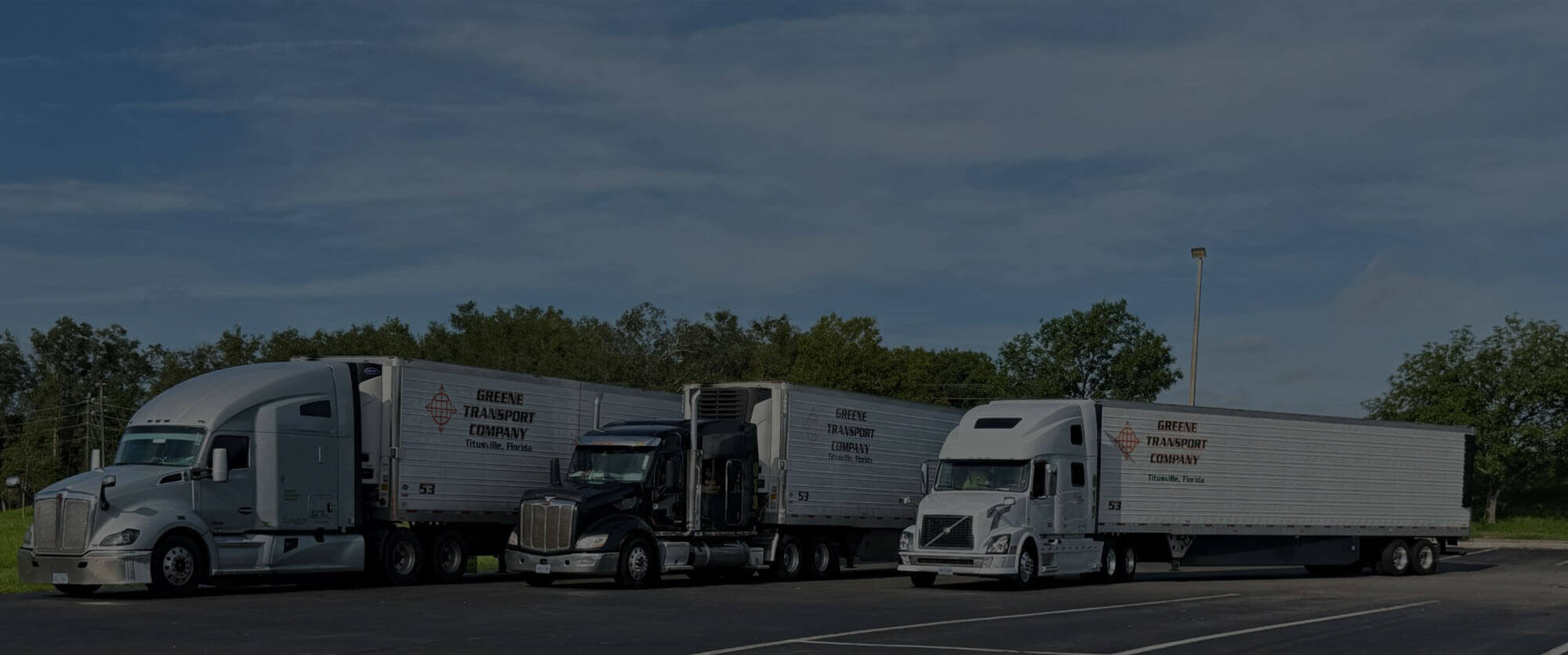
Some logistics companies operate both an owned fleet and a broader carrier network, which changes the calculation entirely. JGLC operates Greene Transport Company, its own asset-based fleet, dispatched first on every load when capacity is available in your lane. When GTC’s own trucks aren’t the right fit, either because of lane, timing, or equipment, JGLC draws on a vetted network of 10,000+ carrier partners built over 60+ years of direct relationships.
That combination means shippers get the accountability of an asset-based provider when JGLC’s own trucks are running the load, and the flexibility of a broader network when they’re not, without having to manage two separate vendor relationships to get both.
What This Means for Your Next Shipment
Before your next booking, ask directly whether the company moving your freight owns the truck running your load or is placing it with a third-party carrier. Neither answer is wrong, but knowing which one you’re getting tells you what kind of accountability and flexibility to expect, and helps you choose the right partner for the specific shipment in front of you.
Key Takeaways
- A freight broker connects shippers with carriers but doesn’t own the trucks moving your freight. That model offers flexibility, but service consistency depends on which carrier gets the load. Learn how JGLC works with shippers.
- An asset-based carrier owns the equipment, which changes accountability. Direct ownership means more predictable service, but coverage is strongest where the fleet is already positioned. Read the story behind JGLC’s asset-based fleet.
- A hybrid model gives shippers both, without managing two vendors. JGLC dispatches its own fleet first and falls back on a 10,000+ carrier network when needed. See how JGLC handles carrier partnerships.
Frequently Asked Questions
What is the difference between a freight broker and a freight forwarder?
A freight broker matches shippers with carriers for domestic transportation. A freight forwarder typically handles more complex logistics, including international shipments, and coordinates multiple aspects of the shipping process beyond a single carrier match.
Is a freight broker the same as a 3PL?
Not exactly. A freight broker specifically matches loads to carriers, while a 3PL, or third-party logistics provider, often offers a broader range of services, including warehousing, freight payment, and supply chain strategy alongside brokerage.
Do freight brokers own trucks?
No. Freight brokers coordinate transportation through a network of carriers but don’t own the trucks or employ the drivers moving the freight directly. That’s the core distinction between a broker and an asset-based carrier.
Is it better to use an asset-based carrier or a freight broker?
Neither is universally better. Asset-based carriers offer more predictable service and direct accountability. Brokers offer more flexibility and access to a wider carrier network. The right choice depends on your freight volume, lane stability, and urgency.
Does JGLC operate as a broker or an asset-based carrier?
JGLC is a logistics partner with its own asset-based fleet. Greene Transport Company is dispatched first on every load when available, backed by a network of 10,000+ vetted carrier partners for additional coverage.
Sources
- LinkedIn, Charles Green, “Freight Broker vs Asset-Based Carrier”
- Redwood Logistics, “Freight Broker vs Asset-Based Carrier: Which Is Better?”
- ATS Inc., “Freight Broker vs. Asset-Based Carrier: Which Is Best for You?”
- Traffix, “Asset-Based Carriers vs. Brokers”
- ArcBest, “Asset-Based vs Brokered Transportation”
- Brown Integrated Logistics, “Freight Brokerage vs. Asset-Based Carrier: What the Difference Costs You”
- ShipEx Logistics, “Freight Broker vs. Asset-Based Carrier: What’s Best for Your Business?”
- TechTarget, “What is 3PL (Third-Party Logistics)?”
- C.H. Robinson, “What is a Third Party Logistics Provider (3PL)?”
- RXO, “What is a 3PL? The Beginner’s Guide to Third-Party Logistics”